
Ceramic silicon carbide (usually referring to reaction-bonded silicon carbide or pressureless sintered silicon carbide) slurry pumps and high-chromium alloy (usually referring to high-chromium cast iron/steel, such as Cr27 or Cr30) slurry pumps are two mainstream wear-resistant solutions. The differences between them are significant and can be compared in detailfromthefollowingaspects: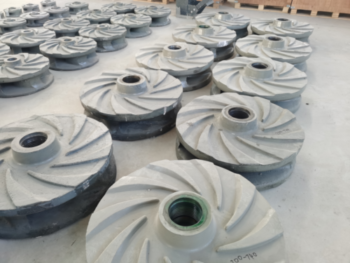
Key Differences Overview
Characteristics: Ceramic silicon carbide (SiC) slurry pumps; High-chromium alloy (e.g., Cr27) slurry pumps
Inherent Materials: Advanced ceramic/inorganic non-metallic materials; Metal alloy materials
Main Advantages: Extremely high wear resistance, excellent corrosion resistance, lightweight; high toughness, impact resistance, good overall mechanical properties
Main Disadvantages: High brittleness, susceptible to impact from hard objects, high cost; relatively low wear resistance, weak resistance to strong corrosion, heavier weight
Applicable Working Conditions: “Fine grinding” conditions with strong corrosion, fine particles, and high wear; “Rough grinding” conditions with large particles, high impact, and complex stress
— Detailed Comparative Analysis
- Material Characteristics and Performance
- Ceramic Silicon Carbide:
- Extremely high hardness: Mohs hardness exceeds 9.5, second only to diamond. This is the source of its excellent wear resistance.
- Excellent wear resistance: Under high-wear conditions, its service life is typically 5-20 times longer or even greater than that of high-chromium alloys.
- Extremely strong corrosion resistance: It exhibits excellent corrosion resistance to most chemical media (including acids, alkalis, and salts, but excluding hydrofluoric acid and hot concentrated alkalis).
- Low density: Weighing only 1/2 to 2/3 of high-chromium alloys, it results in lower inertia for rotary pump components, more flexible start-stop, and lower bearing load.
- High brittleness: This is its biggest drawback. Due to its almost non-ductile nature, it is highly sensitive to blockages from hard objects, sudden impacts from large particles, and mechanical shocks during installation, making it prone to breakage.
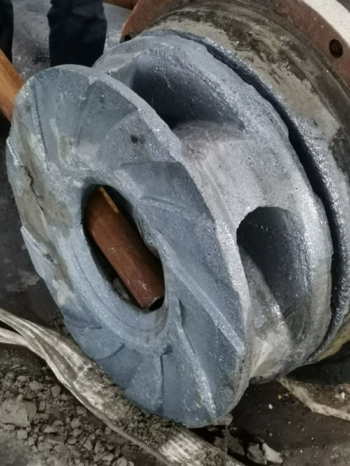
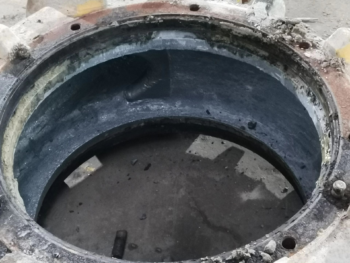
- Comparison of silicon carbide impeller after 6 months of use with metal impeller (very little wear).
High-chromium alloys:
- High hardness: Rockwell hardness (HRC) can reach 60-65, making it an excellent wear-resistant metal material.
- Good toughness: Combining the ductility and impact fatigue resistance of metals, it can withstand material blockage and repeated impacts from large particles without overall failure.
- Moderate corrosion resistance: Primarily resists oxidizing media by forming a passivation film; however, corrosion and wear are significantly accelerated in strong acid, strong alkali, and chloride ion
- en
vironments.
- Excellent overall mechanical properties: Can be cast, machined, and welded (welding requires processing), enabling the manufacture of complex structures and withstanding significant thermal and mechanical stresses.
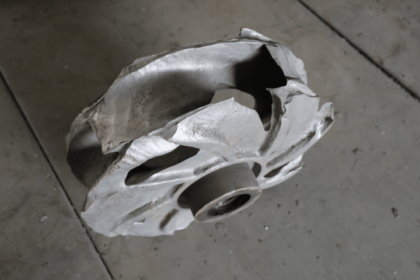
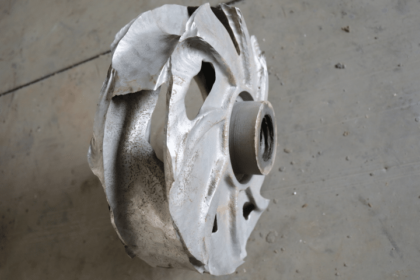
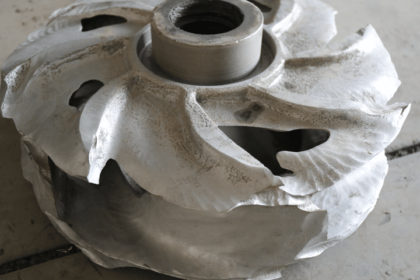 Comparison of 6/4D-AH metal pump impeller and silicon carbide impeller (Application scenario: chromite ore)
- Failure Modes
- Silicon carbide pumps: Failure is usually sudden. Under impacts exceeding their tolerance range, cracks or fractures may suddenly appear, leading to pump leakage or complete failure. However, within their tolerance range, wear is very slow and uniform.
- High-chromium alloy pumps: Failure is gradual, manifesting as uniform wear, erosion, or accelerated wear due to corrosion. Predictive maintenance can be performed through methods such as thickness measurement. Under severe impact, they may deform rather than break.
- Economics and Life Cycle Costs
- Initial Purchase Cost: Components of silicon carbide pumps (e.g., pump casing, impeller, and wear plates) are significantly more expensive than those of high-chromium alloy pumps.
- Service Life: Under suitable operating conditions, silicon carbide pumps have a much longer service life than high-chromium alloy pumps.
- Total Life Cycle Cost:
- Under highly corrosive and abrasive conditions, although the initial investment in silicon carbide pumps is higher, their significantly longer service life, extremely low replacement frequency, less downtime, lower maintenance labor costs, and lower spare parts inventory costs generally result in a lower total cost of ownership.
- Under purely abrasive conditions without corrosion or high impact, high-chromium alloy pumps may be more economical due to their lower cost and greater impact resistance.
- Design and Application Limitations
* **Silicon Carbide Pumps:** Because silicon carbide materials allow for thinner cross-sections, they are typically designed for a more compact structure. High requirements are placed on the piping system, and large particles must be prevented from entering. Installation and maintenance require extra care. Suitable for desulfurization, chemical, coal chemical, and brine media.